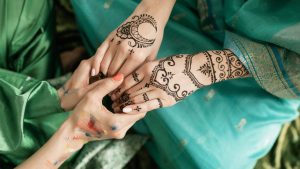
Mehndi or henna has been an important part of cultural celebrations across the world for years, especially in South Asia, the Middle East and North Africa. Henna is an dye that has been in application since ancient times to decorate the skin, and has become an artform in itself over the years. The Arabic mehndi design one of the most popular styles of mehndi.
Arabic Mehndi Design is kind of a fusion of Arabic design as well as Indian design.
An arabic mehndi design, as the name speaks out, comes from the Middle East. But it erupted globally, becoming an endearing form of entertainment in places like India and Pakistan and more. Arabic Mehndi designs it self is different from other mehndi styles which includes Indian mehndi and Pakistani mehndi. They are defined by bold fluid patterns, large floral motifs, and less dense than Indian styles.
Henna usage can be dated back thousands of years to ancient Egyptians, Indians, and Middle Eastern cultures. It was used in these regions for cosmetic purposes, religious ceremonies, and as a form of healing. The practice evolved, varying from culture to culture, with each developing an idiosyncratic style.
Arabic Mehndi Designs Features
Arched and Flowing Patterns: One of the key features of Arabic mehndi designs is the use of large, flowing patterns. These designs frequently involve spirals, swirls, and fine curves. The bold lines offer a clear, eye-catching aesthetic.
Floral Patterns: Mehndi in Arabic Style is characterized by bigger flowers including, roses, lotus and jasmine. These represent beauty, femininity and purity which is why they are also one of the most common flowers used in mehndi art.
Geometric Shapes: The Arabic mehndi design also adds geometric shapes to it, like diamonds, triangles, and circles. Including these shapes, gives a very clean and even modern touch to the said designs.
Open Spaces: Arabic mehndi differs from other kinds of mehndi differs in the way the designs are placed. Arabic mehndi is famous for its spacing between the designs, which gives an open, and pinned look. This style, which is often less filled in, denser designs you often see in Indian mehndi.
Mismatched: Many Arabic mehndi designs include asymmetrical elements or are designed not to match on both hands or feet. This enables the artist to get out of their comfort zone, so every design is never the same!
Popular Arabic Mehndi Designs
Arabic mehndi designs sought mostly for wedding festival and other cultural events. Different Arabic Mehndi Patterns Here are a few of the patterns we see in regular Arabic Mehendi-.
Floral Mandala: Menhdi of Arabic style commonly incorporates Mandalas in the design. A mandala is a circular design that is symmetrical and represents unity, balance, and harmony. Floral mandalas have ornamental petal-like designs spread out around a centre point that is truly beautiful when painted on the hands or feet.
Paisley Motif: Pe PERY DEGH botmG bhy pWkhs dEn tmN hU G. It’s often a teardrop-like figure filled with fine, curvy lines and detailed doodles. Paisley designs are typically paired with flowers, leaves or other details to create a pleasing balance.
Peacock Feather: The peacock represents beauty, grace, and elegance, which makes this motif a favourite choice for mehndi in Arabic style. From there, this peacock feathers design with its light-lined and smooth curves serves to create an art that has an exotic touch of design.
Arabic Mehndi with Flowing VinesArabic mehndi often features flowing vines that wind around the fingers and wrists. These designs can be simple or ornate, managing to achieve an elegant, natural style.
Minimalistic Designs: Arabic mehndi also gives minimalistic designs for the ones who like a clean look. This may have small flowers, dots, or even geometric shapes that are placed to emphasize the natural curves of the hands or the feet.
Significance of Arabic Mehndi
Mehndi is also an Arabic culture-inspired body art. It has a profound cultural significance and is particularly associated with weddings and other major life milestones. According to data, it is thought that applying henna brings luck and positive energy which protects the wearer from harm and evil spirits.
Arabic mehndi is a beautiful decoration done by the bride to enhance her beauty and is applied to the bride to make the bride rejoice in her new life. In many Middle Eastern cultures, a bridal ceremony called mehndi takes place, where the bride’s hands and feet are painted with intricate designs in henna. It is sometimes celebrated with music, dance and celebration.
Henna is also used for spiritual symbolism. Its therapeutic qualities are believed to calm the skin and produce a soothing effect. Mehndi in Some Cultures In some cultures, mehndi also acts as protective amulets that repel negative forces.
Arabic Mehndi in Modern Times
So traditional Arabic mehndi designs though remain, dedicate it to their modern sense. What is more, many modern mehndi artists combine their traditional motifs with contemporary techniques to come up with unique designs. Arabic mehndi is well known not just for weddings, but also for fashion shows, photoshoots and festivals all across the globe.
Arabic mehndi has also crossed boundaries in terms of geography. It actually started from the Middle East but continued to be very popular in many countries in Asia, Europe, and North America. Now, Arabic mehendi designs have become trending because of their beautiful yet simple patterns.
Conclusion
Arabic Mehndi designs are an exotic and traditional form of art which crossed cultures and nations. Their daring patterns, flower designs, and minimalistic chic all bring a hint of beauty and grace no matter the event. Arabic Mehndi, whether you are getting ready for a wedding, celebrating a festival, or simply admiring the art of henna is an exciting way to express creativity, culture, and tradition.